

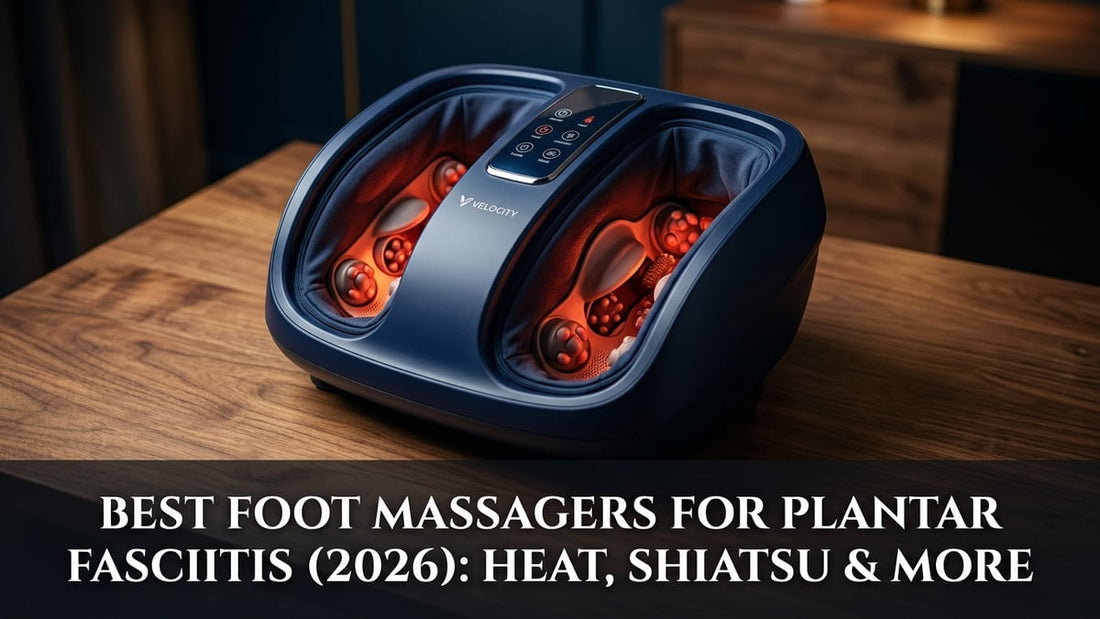
Best Foot Massagers for Plantar Fasciitis (2026): Heat, Shiatsu & More
Find lasting relief from heel pain with our top-tested foot massagers featuring heat therapy, deep shiatsu, and targeted plantar fasciitis support.
Key Takeaways
- Heat matters: Therapeutic heat increases blood flow to the plantar fascia, helping break down scar tissue and reduce morning stiffness.
- Shiatsu kneading targets adhesions: Rotating nodes that mimic deep-tissue massage work directly on the inflamed fascia and tight arch muscles.
- Intensity control is non-negotiable: Plantar fasciitis pain levels vary day to day — adjustable pressure keeps therapy comfortable during flare-ups.
- Foottopia and FOOTOASIS are our top picks: Both deliver targeted arch compression, heat, and variable intensity in well-built, easy-to-use packages.
- Consistency beats intensity: Short daily sessions (10–15 minutes) produce better long-term relief than sporadic deep sessions.
Top Massage Equipment Picks
Premium quality with white-glove delivery included, pre-delivery inspection, and expert support.

ReAthlete FOOTOASIS Foot Massager With Heat & Remote - Deep-Kneading Pain Relief & Relaxation
$99.99
- ✅ White-Glove Delivery Included
- ✅ Free Shipping Included
- ✅ Expert US-Based Support
- ✅ Ongoing Expert Phone Support

ReAthlete Foottopia Foot Massager Machine With Heat, 3 Intensity Levels & Deep Relaxation Features
$99.99
- ✅ White-Glove Delivery Included
- ✅ Free Shipping Included
- ✅ Expert US-Based Support
- ✅ Ongoing Expert Phone Support

ReAthlete NECKA Neck Massager - Shiatsu Heat Therapy for Neck, Shoulder & Back Pain Relief
$89.99
- ✅ White-Glove Delivery Included
- ✅ Portable Design
- ✅ Free Shipping Included
- ✅ Ongoing Expert Phone Support

ReAthlete DEXTRA Cordless Hand Massager with Acupressure, Heat & 6 Intensity Levels
$149.99
- ✅ White-Glove Delivery Included
- ✅ Portable Design
- ✅ Free Shipping Included
- ✅ Ongoing Expert Phone Support
What Is Plantar Fasciitis and Why the Right Massage Matters

Plantar fasciitis is one of the most common causes of heel pain, affecting roughly 2 million Americans each year. It develops when the plantar fascia — the thick band of connective tissue running along the bottom of your foot from your heel to your toes — becomes inflamed or develops tiny micro-tears from repeated stress. The classic symptom is that sharp, stabbing pain with your very first steps in the morning, which often fades after a few minutes of walking only to return after prolonged standing or activity.
What makes plantar fasciitis so stubborn is the tissue itself. The plantar fascia has relatively poor blood supply compared to muscle, which means inflammation and adhesions (the sticky, fibrous build-up of scar tissue) accumulate slowly and heal slowly. Standard rest alone rarely resolves the problem. What the tissue needs is controlled mechanical stimulation to mobilize adhesions, combined with increased local circulation to deliver oxygen and nutrients to the healing site. That's precisely where a quality foot massager earns its place in your recovery toolkit.
Not every foot massager is built for plantar fasciitis, though. A basic vibration pad or a generic roller won't deliver the focused, sustained pressure needed at the arch and heel. You need a device that combines targeted shiatsu kneading, therapeutic heat, and adjustable intensity — features that address both the inflammation and the mechanical tightness driving your pain.
Key Features to Look for in a Foot Massager for Plantar Fasciitis

Before diving into specific picks, it's worth understanding the features that separate a genuinely therapeutic device from a feel-good gadget. Shopping with these criteria in mind will help you make a confident, condition-aware decision.
- Targeted arch and heel coverage: The nodes or rollers must reach the plantar fascia zone — the arch and the medial heel. Devices that only focus on the ball of the foot will miss the primary pain site entirely.
- Therapeutic heat (40–45°C / 104–113°F): Research consistently shows that mild, sustained heat improves soft-tissue extensibility and increases circulation. For fascia work, you want gentle warmth rather than intense heat — enough to relax the tissue, not inflame it further.
- Multiple intensity levels: During an acute flare, even moderate pressure can be painful. During maintenance phases, you need deeper stimulation to break down adhesions. A massager with at least three intensity settings gives you therapeutic range across your entire recovery arc.
- Shiatsu or rotating node mechanism: Oscillating or rotating massage heads mimic the kneading action of a massage therapist's thumb. This is far more effective for fascial work than simple vibration, which stays superficial in the tissue.
- Timer and auto-shutoff: Overstimulating inflamed tissue is a real risk. A built-in 15-minute auto-shutoff keeps your sessions within the safe therapeutic window.
- Foot-specific fit: Open-top or wrap-around designs that accommodate wide feet and higher arches ensure the massage nodes actually contact your fascia rather than bypassing it.
1. Foottopia Shiatsu Foot Massager — Best Overall for Plantar Fasciitis

The Foottopia Shiatsu Foot Massager earns the top spot on this list because it was clearly designed with foot-specific therapeutic goals in mind, not just relaxation. Its deep-kneading rotating nodes are positioned to align with the plantar fascia zone — the inner arch and heel — delivering consistent pressure that progressively loosens fascial adhesions with each session. The kneading action closely replicates the cross-friction technique physical therapists use to break down scar tissue, making it one of the most clinically relevant consumer devices available.
Heat delivery on the Foottopia is gentle and even, warming the foot uniformly without creating hot spots. This matters because uneven heat can cause discomfort and, in some cases, worsen localized inflammation. The device offers three intensity levels that are genuinely distinct — the lowest is suitable for acute flare days, while the highest provides the deep tissue stimulation needed during recovery maintenance. The 15-minute auto-shutoff prevents over-treatment, and the open-top design accommodates feet up to size 13 without compromising node contact on the arch.
Users consistently report that regular morning sessions — before that first painful step out of bed — significantly reduce the severity of the classic plantar fasciitis morning pain spike. This aligns with the physiological principle that warming and mobilizing the fascia before it's loaded reduces micro-tear risk at the stiffest point of the day. For anyone serious about resolving plantar fasciitis rather than just managing it, the Foottopia is the most well-rounded tool in this category.
2. FOOTOASIS Foot Massager Machine — Best for Customizable Deep-Tissue Relief
The FOOTOASIS Foot Massager Machine is the pick for users who want more granular control over their therapy. Where the Foottopia excels at balanced all-around performance, the FOOTOASIS distinguishes itself with a wider range of massage modes and an independently adjustable heat setting — a feature that proves invaluable when you're alternating between heat therapy for stiffness and cooler deep-tissue work for acute inflammation management.
The FOOTOASIS uses a combination of shiatsu rotating nodes and air compression around the foot and lower ankle. This dual-mechanism approach is particularly effective for plantar fasciitis because it addresses two separate problems simultaneously: the air compression promotes venous return and reduces swelling in the heel and arch, while the shiatsu nodes work on the fascial adhesions directly. Studies on compression therapy for plantar fasciitis have shown meaningful improvements in pain scores when compression is applied consistently alongside manual therapy.
The build quality of the FOOTOASIS reflects a premium price point — the interior lining is soft and accommodating, and the footwell geometry is designed to keep the heel properly seated so the nodes contact the correct anatomical zones. It also operates quietly enough to use while watching television or working at a desk, which dramatically improves long-term compliance. Consistent daily use is where plantar fasciitis patients see results, and the FOOTOASIS makes that consistency easy to maintain.
3. Shiatsu Foot Spa Baths — Best Budget-Friendly Heat Therapy Option
For those who want the benefits of heat and basic massage without a significant investment, a dedicated shiatsu foot spa bath deserves serious consideration. These devices combine warm water immersion — one of the oldest and most effective forms of heat therapy — with rotating massage rollers or bubble jets along the footbed. The combination of hydrotherapy and mechanical stimulation addresses plantar fasciitis from multiple angles at a fraction of the cost of premium footbed massagers.
The primary limitation is intensity. Water-based devices cannot replicate the deep node pressure of a device like the Foottopia or FOOTOASIS, so they're better suited for mild-to-moderate cases or as a supplementary tool alongside more targeted devices. They're also less convenient — filling, using, and emptying a water basin takes time and creates a barrier to daily use. That said, many plantar fasciitis sufferers find that a 20-minute warm soak followed by gentle stretching provides substantial overnight relief and reduces morning stiffness significantly.
If you're considering a foot spa bath as your primary plantar fasciitis tool, look for models with built-in motorized rollers (not just bubbles), a consistent temperature-maintenance function to keep water warm throughout the session, and a low-profile basin that allows you to comfortably reach the arch with the rollers.
4. Vibrating Foot Rollers — Best for Targeted Myofascial Release
Vibrating foot rollers occupy a unique niche in plantar fasciitis management. Unlike full-foot massagers, these compact devices allow you to apply precise, localized pressure to the exact point of fascial tightness — rolling slowly along the inner arch, pausing at the heel insertion point, and working toward the ball of the foot. The vibration adds a neurological dimension to the therapy: high-frequency vibration temporarily reduces pain signal transmission through the gate-control mechanism, making it easier to tolerate deeper pressure on inflamed tissue.
The practical advantage is portability. A vibrating roller fits in a desk drawer or carry-on bag, making it the only category on this list that supports therapy at the office, during travel, or anywhere away from home. For plantar fasciitis patients with demanding lifestyles, having a portable tool closes the gap in daily treatment consistency. Several sports medicine practitioners now recommend vibrating rollers as a warm-up tool before activity for plantar fasciitis patients — two to three minutes of slow rolling prepares the fascia for load and may reduce mid-activity pain flares.
The trade-off is the lack of heat and the absence of the circumferential coverage that heel-cupping massager designs provide. Vibrating rollers work best as a complement to a primary device rather than a standalone solution for moderate-to-severe plantar fasciitis.
Foot Massager for Plantar Fasciitis: Side-by-Side Comparison
Use this comparison to quickly identify which type of foot massager best fits your specific needs, budget, and severity of plantar fasciitis symptoms.
- Massage Type: Shiatsu rotating nodes
- Heat: Yes — gentle, even warmth
- Intensity Levels: 3
- Air Compression: No
- Auto-Shutoff: 15 minutes
- Best For: Overall daily plantar fasciitis therapy
- Foot Size: Up to size 13
- Portability: Low (plug-in)
- Massage Type: Shiatsu nodes + air compression
- Heat: Yes — independently adjustable
- Intensity Levels: Multiple modes
- Air Compression: Yes — foot and ankle
- Auto-Shutoff: Yes
- Best For: Customizable deep-tissue + swelling relief
- Foot Size: Wide-fit compatible
- Portability: Low (plug-in)
- Massage Type: Rollers + hydrotherapy
- Heat: Yes — warm water immersion
- Intensity Levels: Low-moderate
- Air Compression: No
- Auto-Shutoff: Varies by model
- Best For: Budget relief, mild cases
- Foot Size: Universal
- Portability: Low (water required)
- Massage Type: Vibration + rolling pressure
- Heat: No
- Intensity Levels: 2–3 vibration speeds
- Air Compression: No
- Auto-Shutoff: Varies
- Best For: Portable myofascial release, travel
- Foot Size: Universal
- Portability: High (battery/USB)
Which Foot Massager Is Right for Your Plantar Fasciitis?
The best foot massager for plantar fasciitis is ultimately the one you'll use every single day. Consistency is the most powerful predictor of recovery outcomes, so ease of use and comfort matter as much as feature lists. If you value a plug-in-and-go daily ritual with proven arch and heel targeting, the Foottopia is the most straightforward recommendation — it hits all the core therapeutic requirements without unnecessary complexity. If you experience significant heel swelling alongside fascial pain, the FOOTOASIS's air compression capability adds a dimension of relief that can meaningfully accelerate your recovery timeline.
Budget-conscious buyers or those in early, mild stages of plantar fasciitis will find real value in a quality foot spa bath, especially as part of an evening wind-down routine. And if your lifestyle keeps you away from home regularly, pairing any primary device with a vibrating roller gives you coverage wherever you are. No single device is a cure — plantar fasciitis recovery also involves stretching, footwear assessment, and sometimes professional treatment — but the right massager becomes an anchor habit that keeps your fascia mobilized, warm, and on the path to lasting relief.
Frequently Asked Questions
Can a foot massager actually help with plantar fasciitis pain?
Yes, foot massagers can meaningfully reduce plantar fasciitis pain by increasing blood circulation, loosening tight fascia tissue, and relieving tension in the heel and arch. Consistent use — particularly before your first steps in the morning and after prolonged activity — has been shown to decrease inflammation and improve flexibility in the plantar fascia. They are not a cure, but they are a well-regarded component of a broader pain management strategy.
Is heat or shiatsu massage better for plantar fasciitis?
Both heat and shiatsu offer distinct benefits, and many of the best foot massagers combine both features for maximum relief. Heat therapy helps relax tight muscles and improves blood flow to the inflamed fascia, while shiatsu nodes mimic deep-tissue kneading that targets pressure points along the arch and heel. If you have chronic stiffness, look for a unit that offers both heat and shiatsu simultaneously for the most therapeutic effect.
How long should I use a foot massager each session when I have plantar fasciitis?
Most physical therapists recommend sessions of 15 to 20 minutes per foot to allow adequate circulation boost and tissue relaxation without over-stressing inflamed areas. Many electric foot massagers have built-in auto-shutoff timers set at 15 minutes, which serves as a useful guideline. Avoid exceeding 30 minutes per session, especially during flare-ups, as prolonged deep pressure on an already inflamed fascia can temporarily worsen symptoms.
Are foot massagers safe to use during an acute plantar fasciitis flare-up?
During an acute flare-up, you should use a foot massager cautiously and avoid high-intensity settings or aggressive deep-tissue modes that could aggravate inflamed tissue. Gentle vibration or light heat settings are generally safer choices during the first 48 to 72 hours of a flare. Always consult your podiatrist or physical therapist if your pain is severe, sudden, or accompanied by swelling, as these may signal a more serious condition requiring medical attention.
What features should I specifically look for in a foot massager for plantar fasciitis?
The most important features to prioritize are targeted arch and heel massage nodes, adjustable intensity settings, and built-in heat therapy, as these directly address the core symptoms of plantar fasciitis. Deep-kneading shiatsu rollers that reach under the arch are especially valuable, since the plantar fascia runs along the bottom of the foot from heel to toe. Adjustable heat levels, a wide foot compartment for comfort, and washable foot liners are practical bonuses worth seeking out.
How much should I expect to spend on a quality foot massager for plantar fasciitis?
A reliable foot massager with heat and shiatsu capabilities typically falls in the $60 to $200 price range, with mid-range models between $80 and $130 offering the best balance of features and durability for most users. Budget models under $50 often lack sufficient arch compression and heat quality to be truly therapeutic for plantar fasciitis specifically. Premium models above $200 may include air compression, customizable programs, and zero-gravity positioning, which can be worthwhile for severe or chronic cases.
Can I use a foot massager if I also have diabetes or neuropathy?
People with diabetes or peripheral neuropathy should consult their physician before using any electric foot massager, as reduced sensation in the feet can make it difficult to detect excessive heat or pressure that could cause injury. If cleared by a doctor, use only the lowest heat and intensity settings and inspect your feet carefully after each session for any redness, blisters, or irritation. Many manufacturers explicitly list diabetes as a contraindication, so reviewing the product's safety guidelines before purchase is essential.
How do I clean and maintain a foot massager to keep it hygienic?
Most foot massagers feature removable, machine-washable fabric liners that should be laundered every one to two weeks with regular use to prevent bacterial buildup. The hard plastic housing can be wiped down with a lightly dampened cloth and a mild disinfectant spray — never submerge the unit in water or use harsh chemical cleaners on electrical components. Storing the massager in a dry location and periodically checking the power cord for wear will extend its lifespan and keep it performing safely.
Continue Your Wellness Journey
Best Massage Chairs for Home (2026): Top Picks for Every Budget
We tested the best massage chairs available in 2026. See our top picks for every budget, from entry-level to luxury full-body massage recliners.
Best Massage Guns (2026): Tested & Ranked for Muscle Recovery
The best massage guns of 2026, tested and ranked. Find the right percussion massager for deep tissue relief, athlete recovery, and everyday soreness.
Best Foot Massagers (2026): Electric, Shiatsu & Compression Picks
Find the best foot massager for plantar fasciitis, neuropathy, or everyday relief. Our 2026 guide covers electric, shiatsu, and compression styles.
