


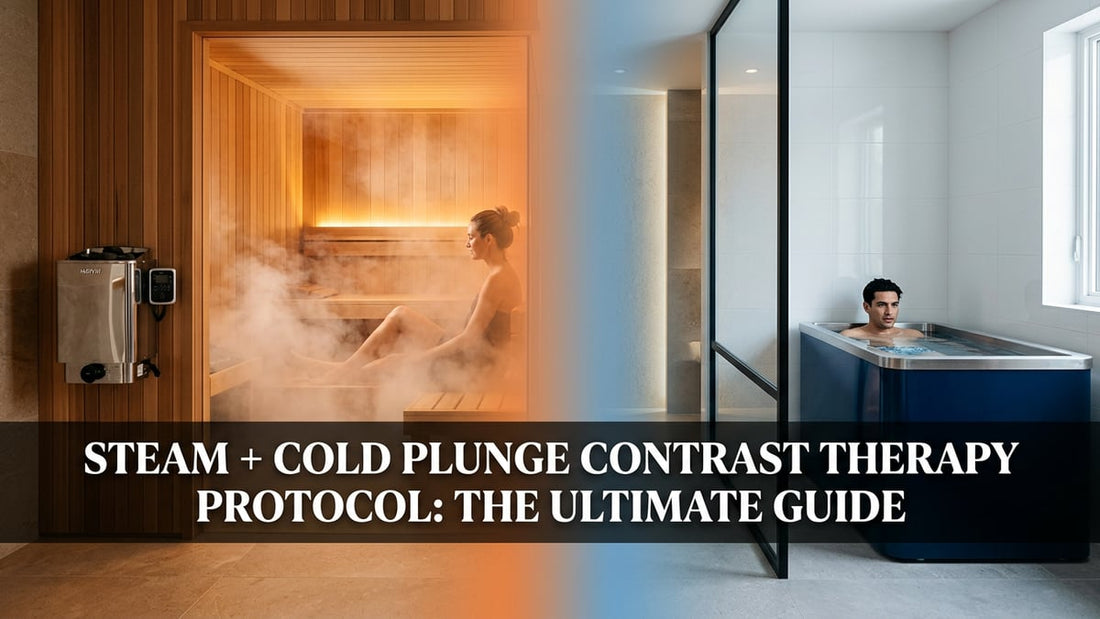
Steam + Cold Plunge Contrast Therapy Protocol: The Ultimate Guide
Explore how pairing sauna sessions with cold plunges compares to stair climbing as a recovery and wellness routine.
Cold plunge contrast therapy is more effective than stair climbing for whole-body recovery because it triggers a 200 to 300 percent rise in norepinephrine, drives vascular pumping through repeated heat and cold cycling, and produces anti-inflammatory and mood effects that low-intensity active recovery cannot replicate.
- Steam rooms run cooler than dry saunas at 110 to 120 degrees Fahrenheit, but near-100% humidity makes them feel more intense at the skin and offers better tissue penetration for contrast work.
- Cold plunge vs stair climbing: Stair climbing sustains circulation gently through active movement, while cold plunge triggers a stress response with norepinephrine release, making them fundamentally different tools rather than interchangeable ones.
- Start high, work down: Cold plunge units typically reach 37 to 50 degrees Fahrenheit, but beginners should start in the high 50s or low 60s and reduce temperature gradually over several weeks as tolerance builds.
- Two to three sessions weekly: Most people do best scheduling contrast therapy two to three times per week, timed for the day after hard training when inflammation peaks and the vascular flushing effects are most useful.
- Delay cold after strength work: If building muscle is a priority, wait at least four to six hours after heavy strength sessions before doing the cold plunge portion rather than plunging immediately after training.
Where to start

Medical Breakthrough Frozen 9 Cold Plunge With Heavy-Duty Step & Aromatherapy Features

Dynamic Cold Plunge Therapy "CUBOID" 304 Stainless Steel Cold Plunge (XL) | Chiller Not Included - Sold Separate
Contrast Therapy: Heat, Cold, and Why the Combination Works
Contrast therapy pairs deliberate heat exposure with deliberate cold exposure, cycling the body between the two to produce recovery and performance effects that neither stimulus creates on its own. The basic physiology is straightforward: heat dilates blood vessels and increases circulation, while cold constricts them and drives blood back toward the core. Move between the two repeatedly and you create a kind of vascular pumping action that flushes metabolic waste, reduces localized inflammation, and accelerates tissue recovery.

The protocol has roots in Scandinavian sauna culture, where moving from a hot room into an ice-cold lake or snowbank and back again has been common practice for centuries. Modern sports medicine has studied this pattern more rigorously, and the evidence generally supports what practitioners long observed: contrast bathing reduces perceived muscle soreness, lowers markers of inflammation, and improves subjective recovery ratings compared to passive rest alone. The steam-and-cold-plunge version of this protocol is simply the most accessible, controlled way to apply the same principle at home or in a dedicated wellness space.
Steam Versus Dry Sauna: Choosing Your Heat Source
The heat side of contrast therapy can come from a dry sauna, an infrared cabin, or a steam room, and each creates a meaningfully different experience. Dry saunas typically run at 170 to 195 degrees Fahrenheit with very low humidity. Steam rooms operate at much lower air temperatures, usually 110 to 120 degrees Fahrenheit, but with near-100% humidity, which makes that temperature feel considerably more intense at the skin surface. Neither is strictly better; the right choice depends on personal preference and what you are pairing with.

For contrast therapy specifically, steam has one advantage that often goes unmentioned: the humid heat penetrates superficial tissues and softens the skin, which can make the thermal shock of the cold plunge feel sharper and more complete. Some practitioners also find that a steam session loosens the respiratory tract in a way that makes the cold immersion feel more clarifying. That said, the physiological core of contrast therapy, the vascular cycling, works equally well with a dry sauna as the heat source. The choice mostly comes down to what you have access to and how your body responds.
Cold Plunge vs Stair Climbing: Two Very Different Recovery Tools
This comparison comes up often among people building a post-workout recovery routine, and it reflects a genuine tension between active and passive recovery methods. Stair climbing after intense exercise is a form of low-intensity active recovery. It keeps blood moving through fatigued muscle groups, helps clear lactic acid, and maintains a modest cardiovascular output without adding significant mechanical load. Many athletes swear by it, and the reasoning is sound.
Cold plunge therapy operates on a fundamentally different mechanism. Rather than gently sustaining circulation, it creates a controlled physiological stress response. Immersion in cold water triggers norepinephrine release, which research has documented at increases of 200 to 300 percent during cold exposure. Core temperature drops, heart rate variability shifts, and the body's thermoregulatory systems activate in ways that stair climbing simply does not produce. The downstream effects on mood, alertness, and inflammation management are distinct from anything a ten-minute walk up a staircase will generate.
Where stair climbing holds a real advantage is in recovery timing relative to strength training. There is ongoing debate in exercise science about whether cold immersion immediately after a hypertrophy session blunts muscle protein synthesis by suppressing the inflammatory signals that drive adaptation. The research is not settled, but the concern is credible enough that many strength athletes now separate their cold plunge sessions from their lifting sessions by several hours, or reserve plunging for non-training days. Stair climbing carries no such concern and can slot in immediately after any session without complicating the adaptation signal.
For general wellness and recovery rather than optimizing hypertrophy, cold plunge therapy offers a broader range of physiological effects. The mental resilience component alone, learning to breathe steadily and stay present while your body is screaming to exit, is something stair climbing cannot replicate. Contrast therapy that incorporates a cold plunge is therefore a more complete recovery protocol for most people, as long as it is timed thoughtfully relative to strength work.
Building the Protocol: Temperature, Timing, and Cycles
A practical steam-and-cold-plunge protocol has three variables to manage: the temperature of each phase, the duration of each phase, and the number of cycles. Getting all three approximately right matters more than optimizing any single one of them.
Temperature Targets
On the cold side, most cold plunge units are designed to reach between 37 and 50 degrees Fahrenheit. The Medical Breakthrough Frozen 6, for example, maintains temperatures as low as 37 degrees Fahrenheit without requiring ice, which puts it at the serious end of the therapeutic range. For beginners, starting in the high 50s or low 60s and working down over several weeks is a sensible approach; the physiological benefits begin well before you reach near-freezing temperatures. On the heat side, aim for whatever source produces a genuine sweat within five to eight minutes of entry.
Duration per Phase
A common starting framework is ten to fifteen minutes in the steam or sauna, followed by two to four minutes in the cold plunge. That ratio reflects the asymmetry of the physiological responses: the heat phase needs enough time to genuinely elevate core temperature and produce meaningful vasodilation, while the cold phase produces its primary stimulus within the first two minutes of immersion. Extending cold exposure beyond four minutes in a single cycle adds limited benefit for most people and increases the discomfort significantly.
Number of Cycles
Two to three complete cycles is the typical target for a full contrast therapy session. A single cycle is enough to produce a noticeable effect, and it is a reasonable starting point for anyone new to the protocol. Three cycles produces the strongest cumulative vascular flushing and tends to generate the clearest post-session clarity of mind that practitioners describe. Beyond three cycles, returns diminish and fatigue can set in, particularly if the steam exposure is aggressive.
Minimum reached by Medical Breakthrough units without added ice
Per cycle; enough to elevate core temperature meaningfully
Optimal range for most sessions; one cycle is a valid entry point
Choosing the Right Cold Plunge for a Contrast Protocol
The unit you choose shapes how practical your contrast protocol actually is. A cold plunge that takes four hours to reach temperature, or that warms up between uses, or that requires you to haul ice bags every session, will disrupt the rhythm of the protocol and eventually fall out of use.
For a home steam-and-cold-plunge setup, an integrated chiller is effectively non-negotiable. The convenience of stepping from a steam room into a unit that is already at your target temperature cannot be overstated. The Dundalk LeisureCraft Flow Cold Plunge illustrates the design approach worth prioritizing: the chiller is concealed within an integrated equipment compartment so there are no exposed hoses, the unit arrives fully assembled, and its 81 by 30 inch footprint fits neatly alongside an outdoor sauna or indoor steam room. The cedar exterior handles weather without complaint, and the stainless steel interior is straightforward to keep clean.
If you want a larger immersion area, the Dynamic Cold Therapy CUBOID XL in 304 stainless steel offers 55 by 30 inch internal dimensions at a considerably lower entry price of $5,999. The chiller is sold separately, which means you can match it to your existing setup or upgrade it independently, though it also means you need to budget and select that component yourself. Anyone working through chiller sizing for a tub of this volume will find that a 1.0 HP unit is typically appropriate for a 304 stainless steel tub of this capacity in a moderate climate.
At the premium end, the Medical Breakthrough Frozen 9 adds the aromatherapy dimension directly to the cold plunge side of the protocol. Its built-in essential oil infuser and steam generator mean you can introduce therapeutic scents during the cold immersion itself, which some users find significantly improves their ability to stay calm and breathe steadily during cold exposure. The Frozen 9 accommodates users up to 6'7" and 375 lbs, operates on a standard 120-volt circuit with no plumbing modifications, and includes a heavy-duty step rated to 500 lbs for safe entry and exit. The $13,649 price point reflects a unit that is genuinely built for daily use over years.
| Model | Price | Interior | Chiller |
|---|---|---|---|
 Dundalk LeisureCraft Baltic Cold Plunge Tub Dundalk LeisureCraft Baltic Cold Plunge Tub |
$2,554.50 | Not published | Separate (110–120V compatible) |
 Dundalk LeisureCraft Flow Cold Plunge Dundalk LeisureCraft Flow Cold Plunge |
$3,597 | Stainless steel | Integrated compartment |
 Dynamic Cold Plunge Therapy Barrel 304 Stainless Steel Cold Plunge Dynamic Cold Plunge Therapy Barrel 304 Stainless Steel Cold Plunge |
$3,299 | 304 stainless steel | Sold separately |
 Dynamic Cold Plunge Therapy "CUBOID" 316 Plastic Cold Plunge (XL) Dynamic Cold Plunge Therapy "CUBOID" 316 Plastic Cold Plunge (XL) |
$4,999 | 316 plastic | Sold separately |
| Dynamic Cold Plunge Therapy "CUBOID" 304 Stainless Steel Cold Plunge (XL) |
$5,999 | 304 stainless steel | Sold separately |
 Dundalk LeisureCraft Polar Cold Plunge Tub Dundalk LeisureCraft Polar Cold Plunge Tub |
$2,615 | Not published | Not published |
The table above covers the core structural differences. What it cannot capture is how much the integrated-versus-separate chiller decision affects day-to-day convenience. If your steam source and cold plunge are within a few steps of each other and the cold unit is already at temperature, the protocol becomes almost effortless to sustain. If you have to pre-chill the water an hour before each session, you will start skipping sessions. Treat the chiller question as a lifestyle decision, not just a budget one. Those exploring which cold plunge chillers perform best in real home installations will find that both efficiency ratings and noise levels vary considerably between models.
Adding Aromatherapy: What It Actually Contributes
Several Medical Breakthrough models, including the Frozen 4, Frozen 6, Frozen 7, Frozen 8, and Frozen 9, incorporate built-in essential oil infusers and steam generators. In the context of contrast therapy, this is more than a marketing flourish. The olfactory system has direct connections to the limbic system, which governs the stress response, and certain essential oils have documented effects on perceived anxiety and autonomic nervous system tone.
Practically speaking, aromatherapy during the cold plunge phase can help users stay calmer during immersion. Cold water contact triggers a strong sympathetic response, and anything that supports parasympathetic activation during that moment, including controlled breathing and familiar scents, tends to make the experience more manageable and the session longer. Users who struggle with the initial shock of cold immersion often report that combining scent with steady breath work makes it significantly easier to stay in the water for two to three minutes rather than bailing at thirty seconds.
The steam generator component is equally useful. Rather than adding scent only during the hot phase, having it available during the cold phase inverts the usual expectation and can create a genuinely novel sensory environment that occupies attention productively during cold exposure.
The Mental Health Dimension: Why This Protocol Goes Beyond Physical Recovery
The physical recovery mechanisms of contrast therapy are well documented, but the mental health effects are arguably what keep people coming back to the protocol consistently. Cold immersion in particular produces a reliable and acute elevation in mood that most users notice within minutes of exiting the water. This effect is tied to the norepinephrine and dopamine release that cold exposure triggers, and research on cold water swimming and cold plunge therapy consistently finds improvements in self-reported mood, anxiety levels, and sense of mental clarity.
The psychological element of contrast therapy is also where the comparison with stair climbing becomes most stark. Stair climbing is comfortable. It is sustainable. It does not challenge you. A cold plunge, particularly one that drops below 50 degrees Fahrenheit, is an act of voluntary discomfort that requires you to override a very strong physiological signal telling you to get out. Doing that repeatedly, deliberately, builds a measurable tolerance for discomfort that carries over into other stressful contexts. The evidence linking regular cold immersion to improved mental resilience is consistent enough to treat this as a genuine training effect, not a motivational platitude.
Pairing the cold plunge with a steam session also creates a complete arc within a single wellness session. The heat phase is expansive and relaxing; the cold phase is acute and activating. Ending on the cold phase leaves most people in a state of alert calm that is quite different from the drowsy relaxation a sauna session alone produces. Many practitioners who use cold exposure alongside meditation practices find that the post-plunge state is particularly fertile ground for focused breathwork or quiet reflection.
Who Should Be Careful: Real Safety Considerations
For healthy adults, contrast therapy is very safe when approached sensibly. The risks that do exist cluster around two failure modes: staying in one phase too long, or moving too quickly between extremes without allowing the body to register the transition. Overheating in a steam room is the more common hazard for beginners, and it is avoided by keeping heat exposures to fifteen minutes or less and drinking water between cycles. Hypothermia from a home cold plunge is genuinely rare because the units maintain a set temperature floor, the Frozen 1 and Frozen 6 both enforce a 37 degree Fahrenheit minimum, and the body will communicate clearly when it needs to exit.
The heavy-duty step on units like the Medical Breakthrough Frozen 3, Frozen 9, and others in that line matters most in this context. Exiting a cold plunge quickly, which many users want to do, while physically constricted and slightly unsteady from the cold is exactly when a stable step with a generous weight rating prevents falls. It is a detail that distinguishes equipment designed for serious regular use from units that cut corners on the entry and exit experience.
Finally, do not end a session in the steam room. Finishing on cold and then allowing the body to rewarm naturally in the open air is the standard practice. It extends the metabolic and mood effects of the cold phase and avoids the paradox of immediately re-warming in a way that negates much of what the cold immersion accomplished.
Setting Up a Home Contrast Therapy Space
A functional home contrast therapy setup does not require a dedicated wellness room, though that is the ideal. The minimum requirement is a steam source and a cold plunge unit within comfortable walking distance of each other, ideally on a level surface with adequate drainage nearby. The Dundalk LeisureCraft Flow Cold Plunge is designed with exactly this use case in mind: its concealed hose management and integrated equipment compartment mean it sits cleanly alongside a sauna or steam unit without visual clutter or exposed infrastructure.
Outdoor setups are common and practical. Many of the units available through our cold plunges collection are rated for year-round outdoor use, with weather-resistant exteriors and insulation that maintains temperature regardless of ambient conditions. The Medical Breakthrough Frozen 9, for instance, uses military-grade exterior materials with UV protection, which means it handles direct sun and rain without degrading. Pairing it outdoors with a sauna creates a recovery setup that many dedicated athletes find genuinely transforms how they manage training load across a week.
For those who want to complement their contrast therapy setup with other recovery modalities, contrast therapy baths offer single-unit solutions that combine hot and cold in one system, which is worth considering if space is the primary constraint. The installation considerations for a cold plunge, including drainage, power supply, and surface requirements, are covered in the delivery and installation guidance available for each model, and the manufacturers are generally clear about what each unit requires.
Power requirements are worth confirming before purchase. Most of the Medical Breakthrough units operate on standard 120-volt circuits with no special wiring. Larger chillers on separate-component systems may require dedicated circuits, and understanding what your installation will need before the unit arrives prevents surprises on setup day.
When to Use Contrast Therapy and When to Skip It
Contrast therapy works best as a scheduled recovery tool rather than an impulsive one. Two to three sessions per week fits most people's training schedules without becoming a recovery practice that itself requires recovery. The most effective timing for most users is on the day after hard training sessions, which is when inflammation and soreness peak and when the vascular flushing effects of the protocol have the most to work with.
More cold plunges worth a look
Dundalk LeisureCraft Flow Cold Plunge

Medical Breakthrough Frozen 6 Cold Plunge Tub with Essential Oil Infuser & UV Protection
Frequently asked questions
Is steam and cold plunge contrast therapy suitable for beginners?▾
It is accessible to most healthy adults, but beginners should scale both ends of the protocol carefully. Start with shorter steam exposures of five to seven minutes and set your cold plunge in the high 50s or low 60s Fahrenheit rather than diving straight to near-freezing temperatures. The physiological benefits begin well before you reach the extreme end of the range, so there is no need to rush.
Are there any safety concerns with alternating between steam heat and cold immersion?▾
The main risks are dizziness from rapid blood pressure shifts and overheating in high-humidity steam environments, where your perceived exertion can lag behind your actual cardiovascular load. Give yourself a brief transition period between phases, stay hydrated, and exit immediately if you feel lightheaded. People with cardiovascular conditions should get clearance from a physician before attempting contrast therapy.
How much does a quality cold plunge for home contrast therapy cost?▾
The range is fairly wide depending on materials and features. The Dundalk LeisureCraft Flow Cold Plunge is priced at $3,597, the Dynamic Cold Therapy Cuboid XL at $5,999, and the Medical Breakthrough Frozen 6 and Frozen 9 at $12,649 and $13,649 respectively. The higher-end units include built-in chillers, advanced filtration, and aromatherapy features, while entry-level models may require a separately purchased chiller.
What are the ongoing running costs of a cold plunge unit?▾
Energy consumption is the main recurring cost, and insulation quality has a significant impact on it. The Medical Breakthrough Frozen 9 uses FoamSeal military-grade insulation specifically to reduce cooling time and improve energy efficiency. Water treatment consumables and periodic filter maintenance also add modest costs over time. The manufacturer does not publish exact kilowatt-hour figures, so it is worth asking about energy draw at the voltage the unit operates on.
What does routine maintenance on a cold plunge involve?▾
The core tasks are water filtration, sanitization, and keeping the chiller or cooling system clear of debris. The Medical Breakthrough Frozen 6 and Frozen 9 both include a 20 Ultra Micron Filter System designed to capture fine particles and maintain water purity between full water changes. The Dundalk LeisureCraft Flow Cold Plunge is built with an easy-access equipment compartment specifically to simplify servicing and utility connections. How often you change the water depends on usage frequency and your sanitization routine.
How do I choose the right size cold plunge for my body and space?▾
User capacity is the first thing to check. The Medical Breakthrough Frozen 9 accommodates individuals up to 6 ft 7 in and 375 lbs, while the Frozen 6 fits users up to 6 ft 6 in and 350 lbs. The Dynamic Cold Therapy Cuboid XL measures 55 in long by 30 in wide by 31.5 in tall, and the Dundalk LeisureCraft Flow Cold Plunge has a footprint of 81 in by 30 in. Measure your intended installation space carefully and account for access around the unit for maintenance.
What is the most common mistake people make when starting a contrast therapy protocol?▾
Pushing both ends of the protocol too hard too soon is the most common error. People set the cold plunge as cold as it will go and sit in the steam room until they feel faint, then wonder why the experience feels miserable rather than restorative. A smarter approach is to treat the first few sessions as calibration, starting with five to seven minutes of steam and cold water in the high 50s Fahrenheit, then adjusting temperatures and duration based on how you recover over the following 24 hours.
Shop cold plunges
Quality inspected before shipping, with expert US-based phone support before and after purchase.
